Mercury Isn’t the Only Thing in Retrograde
What starch retrogradation does to sourdough, and why your freezer might change the way you digest bread.
No, we haven't started consulting the stars to decide when to bake the sourdough. Our starter has enough personality already.
This is actually about something called starch retrogradation. Despite sounding like a problem caused by Mercury, retrogradation is a bit of food science that may be particularly interesting to anyone who loves bread but also pays attention to carbohydrates and blood sugar.
So while we can't tell you whether sourdough is compatible with your rising sign, we can tell you that cooling and freezing bread can change the way some of its carbohydrates behave in your body.
And unlike astrology, there are studies.
We have always told customers that if you aren't going to finish one of our loaves within a couple of days, freeze it. Our bread doesn't have preservatives, and good sourdough freezes remarkably well.
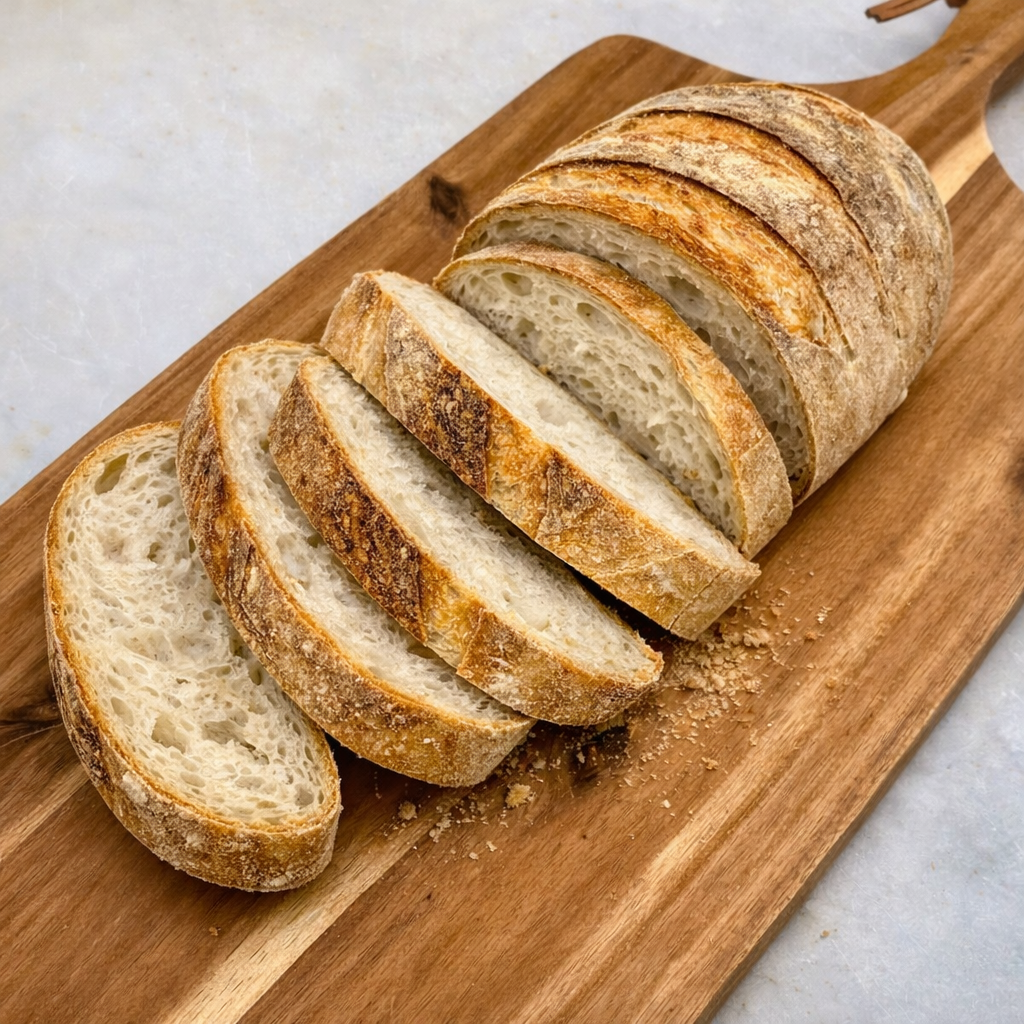
What we didn't realize until fairly recently is that freezing bread doesn't just preserve it. It can actually change the structure of some of its starch.
That's where retrogradation comes in. No birth chart required.
When bread is baked, the starch in the flour absorbs water and changes structure. As that cooked starch cools, some of those starch molecules re-organize into structures that are harder for our digestive enzymes to break down. Some of it becomes what's known as resistant starch.
Resistant starch behaves somewhat like dietary fiber. Rather than being rapidly broken down into glucose in the small intestine, some can make its way to the large intestine, where it can also become food for beneficial gut bacteria—a prebiotic effect.
Turns out the stars aren't the only things that benefit from being resistant.
This isn't just about bread
One interesting demonstration involved pasta.
Researchers at the University of Surrey worked with the BBC to test what happened when people ate the same pasta freshly cooked, cold after being cooked and cooled, or cooked, cooled and reheated.
Fresh pasta produced the largest blood sugar response. Cold pasta produced a smaller one. But the surprising result was the leftovers: the cooled-and-reheated pasta reportedly produced a blood glucose response about 50% lower than the freshly cooked pasta.
It was a small experiment, so don't re-organize your entire diet around last night's spaghetti. But the result is consistent with what we know about resistant starch. Cooling cooked starch changes its molecular structure, and reheating doesn't necessarily return it to its original state.
Similar effects have been studied with rice and, most relevant to us, bread.
What about sourdough?
A small study published in the European Journal of Clinical Nutrition compared people's blood glucose response after eating bread fresh, frozen and defrosted, toasted, or frozen, defrosted and then toasted.
With the homemade bread used in the study, freezing and defrosting reduced the two-hour blood glucose response by about 31% compared with eating it fresh. Freezing, defrosting and then toasting produced a response about 39% lower than the fresh bread.
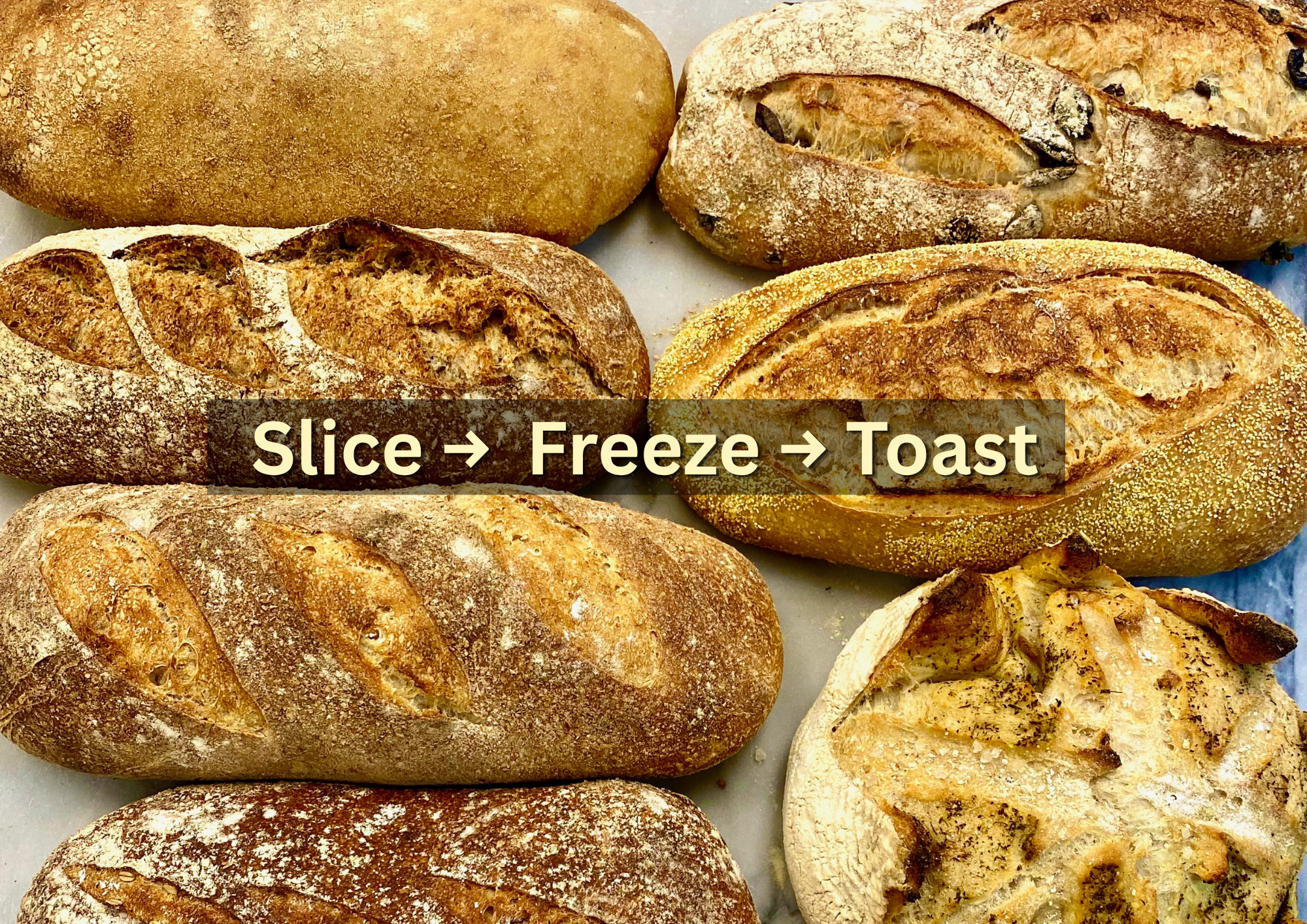
Again, small study. Individual responses vary. But the broader point is fascinating: the same ingredients can behave differently in our bodies depending on what happens to them before we eat them.
And that gets at something we've believed about bread for a long time…
How food is made matters
Nutrition has a tendency to get reduced to numbers: calories, protein, fat, carbohydrates.
Those numbers matter, but they don't tell the whole story.
Our sourdough is organic flour, water, sea salt and our sourdough starter, which we've been maintaining for more than 15 years. We don't add sugar, preservatives or dough conditioners. Then we give the dough time to ferment naturally.
Traditional sourdough fermentation doesn't just create flavor. Research suggests that fermentation itself can affect starch digestion and may produce a more favorable post-meal blood glucose response than conventionally yeast-leavened bread.
We don't think good bread needs to pretend to be something it isn't. Our sourdough has carbohydrates. It's bread.
But we'd rather have the conversation be about what kind of bread we're eating and how it was made than whether bread belongs on some universal list of good foods or bad foods.
If you're going to eat bread, we think you should eat really good bread.

So are we telling you not to eat our bread fresh?
Absolutely not.
If you're standing in our café with a fresh piece of sourdough in front of you, please eat it. We certainly do.
The point isn't that frozen bread is "good" and fresh bread is "bad." It's that carbohydrates are more complicated than the number on a nutrition label. Fermentation matters. Food structure matters. And for people who are particularly conscious of their blood sugar, cooling and freezing bread is another tool worth knowing about.
If you buy our bread at the bakery, farmers market or one of the grocery stores we deliver to around Northern California, it arrives fresh and has never been frozen.
Eat it fresh. And if you're not going to finish the loaf quickly, slice what's left and freeze it instead of letting good bread go stale. Individual slices can go straight into the toaster, or you can thaw a larger piece and refresh it in a hot oven.
And if we ship it to you, we've already done the freezing
Freezing is also what allows us to send the bread we bake here in Auburn around the country without changing the recipe or adding preservatives to survive the trip.
Our bakers make the bread overnight. First thing in the morning, the loaves we're shipping are sent to our frozen fulfillment center and frozen while they're fresh. They're then packed and shipped frozen.
It's the same sourdough we sell locally, made the same way. When it arrives, keep it frozen until you're ready for it, then thaw and refresh the loaf or pull out individual slices for toast.
Order our sourdough for nationwide shipping
If you're local, come eat it fresh with us.
If you take a loaf home, eat the first half fresh and freeze the second half.
We can't promise either one will improve your love life, bring financial abundance or get Mercury out of retrograde.
But both are really good bread.
-The Baker and the Cakemaker
This article is intended for general information and isn't medical advice. Freezing, cooling and reheating starchy foods does not eliminate their carbohydrate content, and individual blood glucose responses vary. People with diabetes or other conditions affecting blood glucose should follow the guidance of their healthcare provider.