Your Guide to Real Sourdough Bread: What Really Matters
How to recognize real sourdough, understand how it is made, and choose bread more thoughtfully.
Not all bread is created equal. The flour matters. The ingredients matter. How the bread is made matters. And in real sourdough, time matters!
This guide is here to help you look beyond the word sourdough on the label and understand what you are actually buying. What's in it? What kind of flour was used? How was it fermented? Was the sour flavor developed through fermentation or added later?
And, most importantly, is your bread actually worth eating?
If you care about ingredients, flavor, and how your food is made, the answer doesn't have to be no bread. It can simply be better bread.
At The Baker & The Cakemaker in Auburn, California, we make our artisan sourdough from scratch with organic flour, a living starter and the attention of our bakery team. You can enjoy it locally or have it delivered.
Order our artisan sourdough and have it shipped directly to your door across the continental U.S.
What is real sourdough bread?
Traditional sourdough begins with a living starter and is naturally fermented over time. Wild yeasts and lactic acid bacteria work on the dough, helping it rise and developing its flavor, aroma, texture and structure.
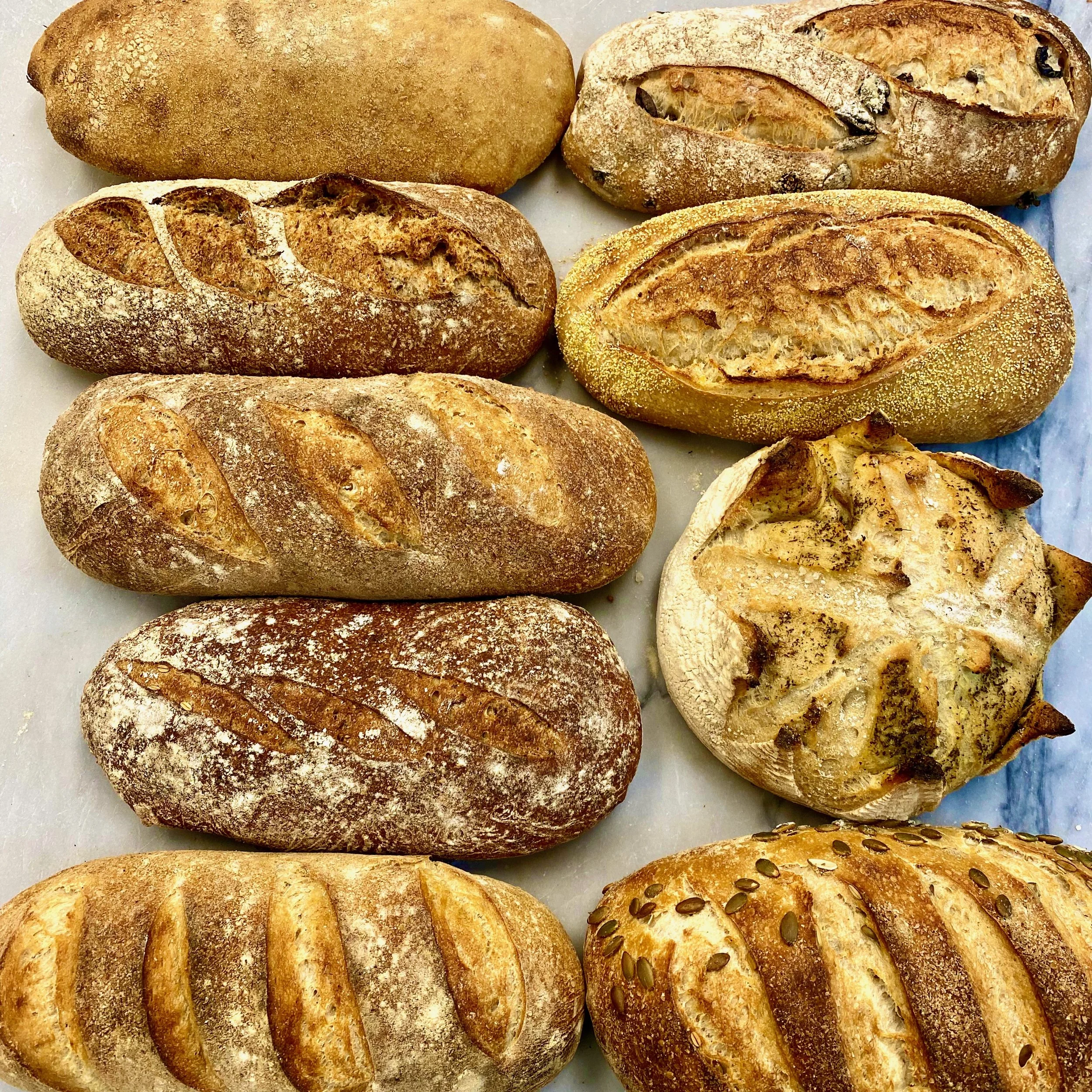
Our bakery collection includes nine sourdough loaves, with eight currently available online: Artisan French Sourdough (Campagne) Bread, Meyer Lemon Rosemary, Kalamata Olive, Levain (Multi-Grain), Polenta, Roasted Pumpkin Seed, Seeded Wheat and Rye.
How can you tell if it’s real sourdough?
A rustic crust and a tangy flavor can make a loaf look and taste like traditional sourdough. Neither tells you how it was made.
Some commercial loaves use added acids, vinegar, or flavorings to create or adjust the tang. Seeing those ingredients doesn’t tell you whether the dough was also fermented with a starter. A sour taste alone isn’t proof of the process.
The issue is knowing what you’re buying. Start with the ingredient list and any explanation of fermentation on the package. If the process isn’t explained, the label may not give you enough information to tell.
Why do organic flour and fermentation time matter?
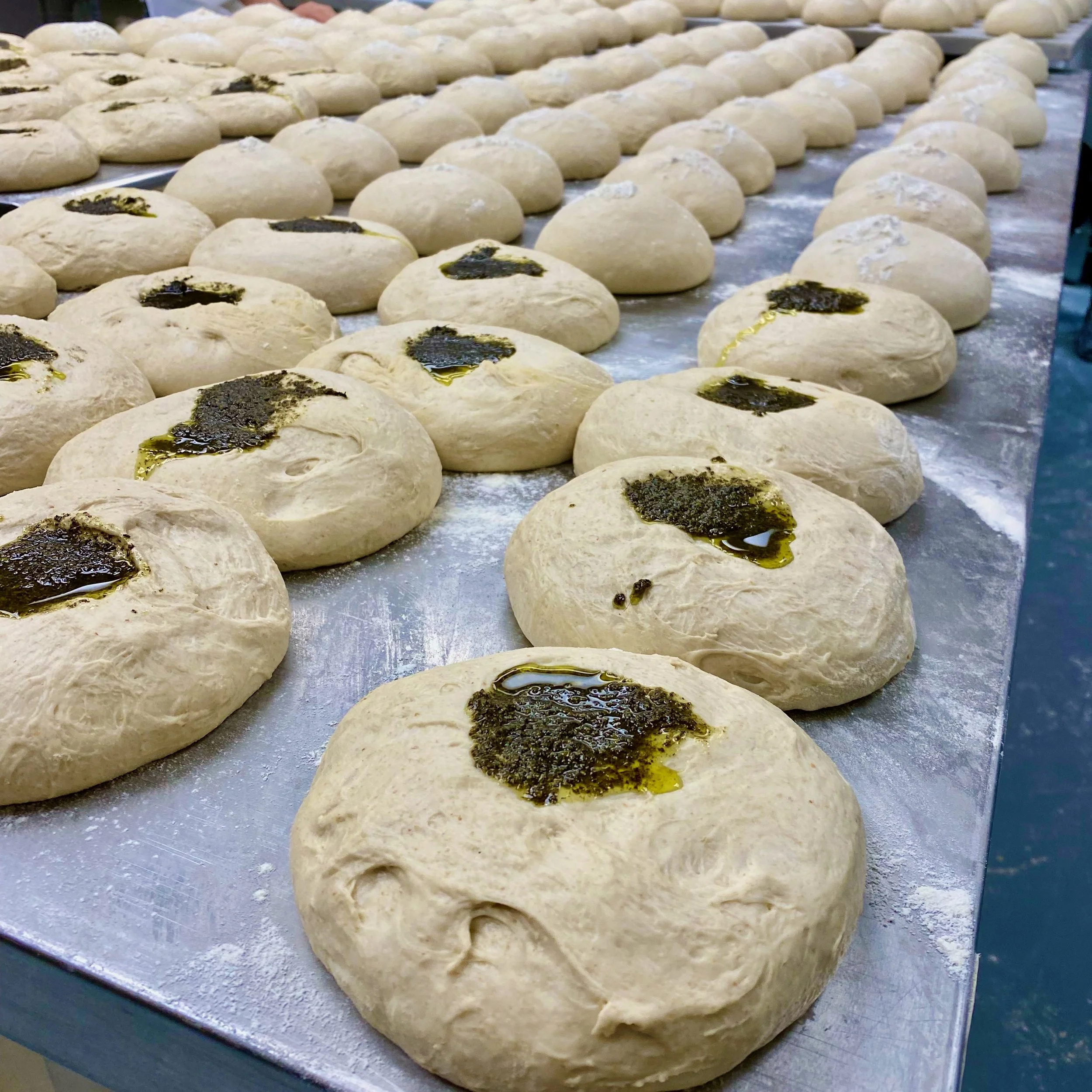
Our sourdough starts with organic, unbleached wheat flour, with other grains and ingredients depending on the recipe. Organic describes how ingredients are produced under organic standards. Sourdough describes fermentation. At our bakery, we bring those choices together.
Then comes time. Fermentation isn't simply dough sitting around waiting to be baked. The living culture is working throughout that time, and so is the baker.
A starter must be fed and maintained. Dough changes with temperature, water levels, flour and even the season. Good bakers watch it, touch it, smell it and adjust. That attention is at the heart of our artisan bread: good ingredients, a living culture, and bakers who use their judgment at every stage.
What about preservatives and freshness?
Bread is perishable. Mold and staling are real challenges, especially for manufacturers trying to keep packaged bread soft on a shelf. Our sourdough is made without artificial preservatives, so storage matters.
For delivery, our loaves are baked, cooled and frozen while fresh, then carefully packed. At home, enjoy what you'll eat soon and freeze the rest. Slicing before freezing makes it easy to take out what you need. Keep a few slices ready for toast, sandwiches, or a bowl of soup. Your future hungry self will thank you.
See our shipping and storage information for the details.
What to look for on a bread label
Next time you’re in the grocery store’s bread aisle, turn over a couple of loaves and compare the labels. You don’t need a baker beside you to take a closer look at what’s in your bread.
Start with the ingredient list, not the promises on the front. Here are five things to check:
☐ Find the flour. Note which grains are listed and whether the flour is identified as organic. A rustic-looking loaf doesn’t tell you either.
☐ Look through the extras. More than six ingredients? Keep reading. Seeds, olives, and herbs add flavor; sugar and other sweeteners add sweetness. The number alone isn’t a verdict. What matters is what those ingredients contribute.
☐ Check for preservatives and dough conditioners. Examples include calcium propionate and potassium sorbate (preservatives), and L-cysteine and azodicarbonamide (dough conditioners). Sourdough can be made without these additions. Compare labels if you prefer a loaf without them.
☐ Look for information about fermentation. Does the package describe a sourdough starter or a fermentation process? Note any vinegar, added acids, or sour flavoring, too. Neither those additions nor the word “sourdough” alone tells the whole story. If details are missing, leave that question open.
☐ Check who made it and where. Look for a named bakery, a stated baking location, and a website with more detail. A distributor’s address isn’t necessarily where the bread was baked.
An unfamiliar ingredient name doesn’t automatically mean it is harmful, and a label cannot tell you everything about the baking process. But it can help you compare what’s been added and choose what you want in your loaf. Read more about our choices in The Nasty Nine.
And don't forget the most important test: does it taste good?
Toast with salted butter. Sourdough under softly cooked eggs. Grilled cheese with a deeply browned crust. Bread alongside soup. A sandwich built on bread that deserves its filling. And a meal feels complete when there’s bread to break and share.
Good bread doesn't merely accompany a meal. It changes the meal.
Start with the meals you love, then choose a loaf to go with them. Here are three to try: Want to see the rest? Explore our breads.
Artisan French Sourdough (Campagne) Bread
Our Artisan French Sourdough (Campagne) Bread is a versatile everyday choice. Try it toasted with butter, piled high for a sandwich, or alongside a bowl of soup.
Kalamata Olive
Kalamata Olive brings savory flavor to the table. Serve it with a salad, a cheese plate, or a little olive oil for dipping.
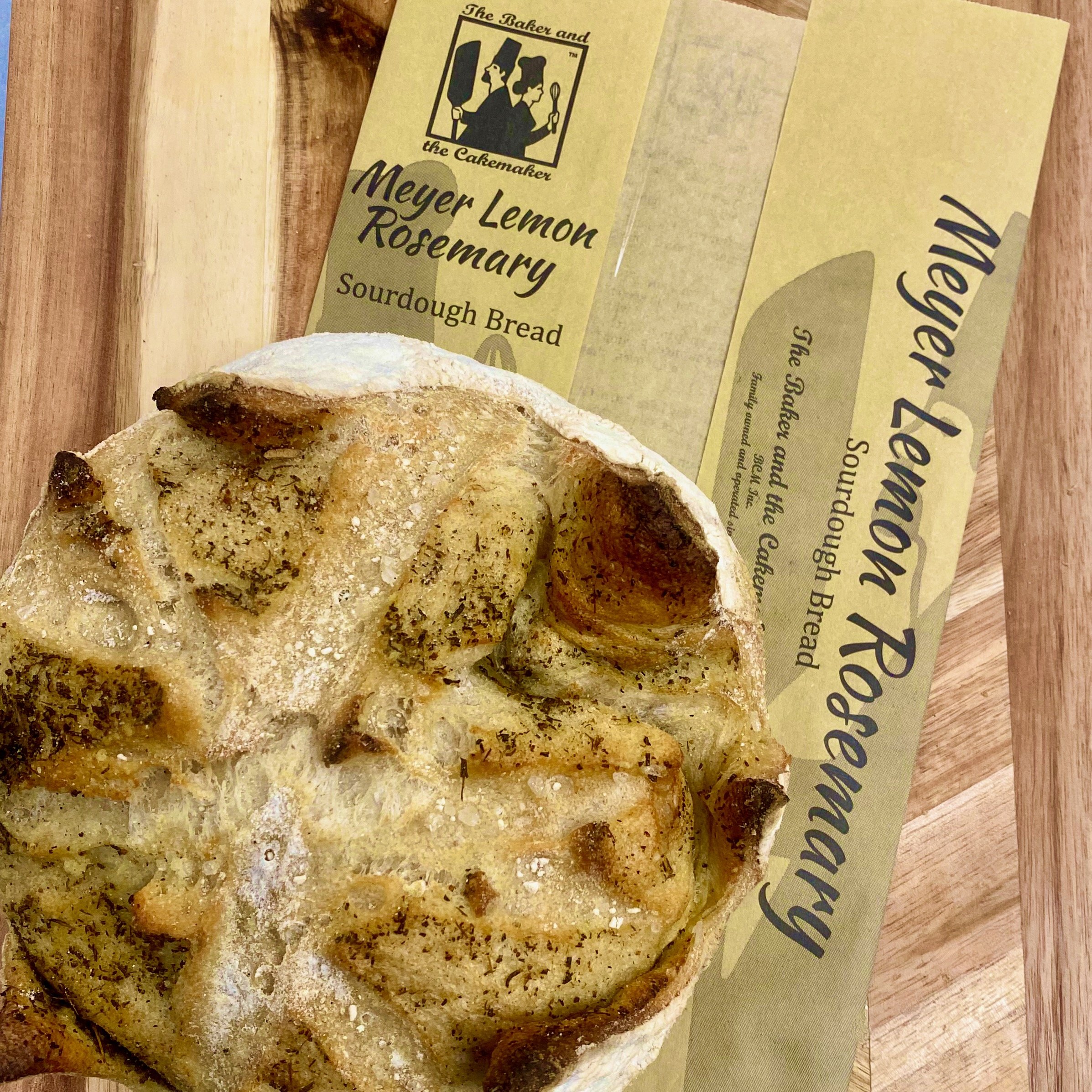
Award-winning Meyer Lemon Rosemary
Our Meyer Lemon Rosemary pairs citrus and herbs with our sourdough. Try it alongside soup or roasted vegetables, or toast it simply so the bread’s own flavor comes through.
Our team zests locally grown California Meyer lemons in-house and freezes the zest to preserve its seasonal flavor for the bread. That loaf earned second place in the Savory Sourdough category at the 2025 World Bread Awards.
Artisan bread made in Auburn, CA, delivered to your door
At The Baker & The Cakemaker, every sourdough loaf begins with organic flour and our living starter, nurtured for more than 16 years. We give our dough time to ferment naturally and our bakers the time they need to work with it.
We don't use commercial-yeast shortcuts to rush our sourdough, or artificial preservatives, dough conditioners or added sour flavoring to imitate fermentation. The character of our bread comes from the flour, the starter, the fermentation, and the bake.
Our small-batch bread is made by our bakery team here in Auburn. If you don't live nearby, you can still have it on your table. We ship throughout the continental United States.
Not all bread is created equal. Choose a loaf whose ingredients, process and flavor matter to you. We'll do the baking. You bring your appetite.
Order our artisan sourdough and have it shipped directly to your door across the continental U.S.
Want to learn more?
Not all bread is created equal, and we want you to feel confident choosing yours. We’re here to help you understand the ingredients, the process, and what makes a loaf worth bringing home.
Visit our frequently asked questions for more about our ingredients, storing your bread, and visiting the bakery. Have a question of your own? Reach out to us at info@thebakerandthecakemaker.com. We’re happy to talk bread.
Organic flour. Real fermentation. Bread worth craving.
Bread as It Should Be™